
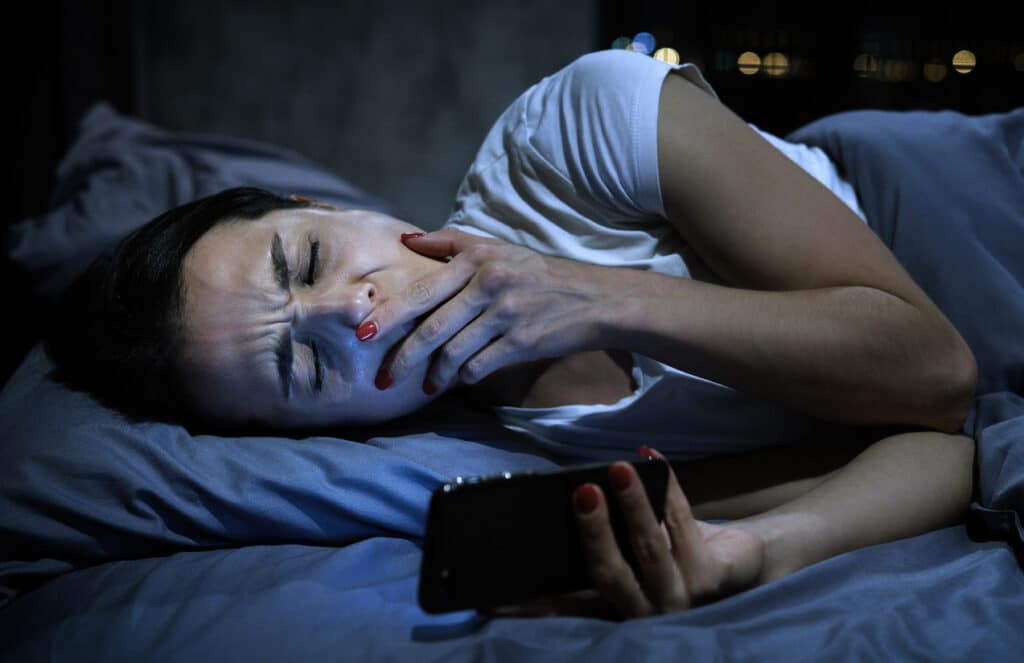
Waking at nearly the same time every night can be frustrating, especially when you once slept well. Perimenopause may be part of the reason, even before your periods stop. Through perimenopause treatment, our team at Howard Health & Wellness looks at interrupted sleep alongside your cycle, symptoms, habits, and medical history. Our founder, Dr. Corey Howard, is board-certified in internal and functional medicine and has nearly three decades of medical experience.
Why Perimenopause Can Interrupt Sleep
During perimenopause, estrogen and progesterone can rise and fall unevenly. These shifts may affect body temperature, mood, and the way you move through different stages of sleep.
Night sweats can wake you feeling hot or damp, followed by chills that make it difficult to settle again. You may also wake with a racing mind, increased anxiety, or no obvious trigger at all. Interrupted nights and early-morning wakefulness can begin before cycle changes become dramatic, so many women do not immediately connect poor rest with perimenopause.
Hormones Are Not the Only Possible Cause
Sleep problems can have several contributing factors. Stress, caffeine, alcohol, medication effects, bedtime habits, and other health conditions can all interfere with rest. Our article about how sleep quality affects aging explains why ongoing disruption deserves attention beyond next-day fatigue.
When we evaluate sleep changes, we may ask about:
- Changes in cycle length, flow, or skipped periods
- Night sweats, hot flashes, brain fog, or mood shifts
- Stress, caffeine, alcohol, exercise, and bedtime habits
- Current medications and medical history
- Snoring, restless legs, or other signs of a separate sleep concern
One hormone test does not always explain what is happening. Symptoms, menstrual history, lab work, and overall health can give us a clearer view because hormone levels often vary throughout this phase.
How Perimenopause-Related Sleep Problems May Be Managed
Care should reflect what is actually disrupting your sleep. Nutrition, exercise, stress management, and practical changes to your evening routine may all be useful.
When medically appropriate, we may also discuss hormone therapy for women. Options can include hormone patches, although the right method and dose depend on your symptoms, medical history, and treatment goals.
Women who have gone 12 months without a period may need care centered on menopause treatment. We also offer telehealth hormone consultations for patients who cannot visit our Naples office.
Get Answers About Restless Nights
Persistent sleep disruption deserves a closer look. To talk with Dr. Corey Howard about your symptoms, contact us at Howard Health & Wellness in Naples, FL, or call 239-331-2285.